THREE:
FORE:The king had a stormy and rather perilous passage across the Channel. Mr. Freemantle sarcastically alludes to the feelings of the royal passenger in connection with this voyage:¡ª"The king in his journey home overtook Lord and Lady Harcourt, now the bosom friends of Lady Conyngham, stopped them, got out of his carriage, and sat with them for a quarter of an hour on the public road, recounting all his perilous adventures at sea, and flattering reception in Ireland. Lady Harcourt told me his pious acknowledgment for his great escape of being shipwrecked was quite edifying, and the very great change in his moral habits and religious feelings was quite astonishing, and all owing to Lady Conyngham." On his return to London, after a visit to Hanover, the king devoted himself to a life of seclusion for a considerable time, during which it appears that the Marchioness of Conyngham maintained an ascendency over him most damaging to his character and Government. She had not only made the royal favour tributary to the advancement of her own family, but she meddled in political affairs with mischievous effect. "Had it been confined to mere family connections," writes Robert Huish, "no voice, perhaps, would have been raised against it; but when the highest offices in the Church were bestowed on persons scarcely previously heard of¡ªwhen political parties rose and fell, and Ministers were created and deposed to gratify the ambition of a female¡ªthen the palace of the king appeared as if surrounded by some pestilential air. The old hereditary counsellors of the king avoided the Court, as alike fatal to private probity and public honour. The entrance to Windsor Castle was, as it were, hermetically sealed by the enchantress within to all but the favoured few. The privilege of the entr¨¦e was curtailed to the very old friends of the king, and even the commonest domestics in the castle were constrained to submit to the control of the marchioness. The Court of George IV. certainly differed widely from that of Charles II., although the number and[221] reputation of their several mistresses were nearly the same in favour and character; but George IV. had no confiscations to confer on the instruments of his pleasures."
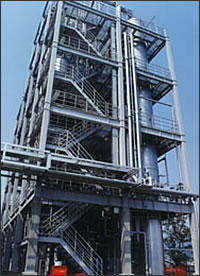
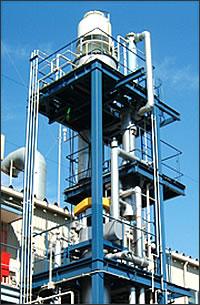
Methanol refinement systems, amyl alcohol refinement systems, ethanol refinement systems, hexanol distillation systems, propanol refinement systems, cyclohexanol distillation systems, isopropanol dehydration systems, ethylene glycol recovery systems, and butanol distillation systems.
FORE:The number of places in which the inquiries under the commission were carried on was 237, having a population of 2,028,513. In twenty-five places the number of corporators was not ascertained; in the others (212) they amounted to 88,509. The governing body was self-elected in 186 boroughs. This body elected the mayor in 131 boroughs, appointed the recorder in 136, and the town-clerk in 135. The number of corporators exercising magisterial functions was 1,086, in 188 boroughs. In 112 boroughs the corporations had exclusive criminal jurisdiction, extending to the trial of various descriptions of offences, and in forty-two their jurisdiction was not exclusive. Seventeen boroughs did not enjoy any income whatever; in eight the precise amount could not be obtained. The total income of 212 boroughs amounted to ¡ê366,948; their expenditure to ¡ê377,027. 103 were involved in debts amounting to ¡ê1,855,371, and were besides burdened with annuities amounting to ¡ê4,463. In twenty-eight boroughs only were the accounts published; in fifteen the annual income was under ¡ê20; in eleven it was between ¡ê2,000 and ¡ê3,000; in five, ¡ê3,000, and under ¡ê4,000; in one, ¡ê4,000, and under ¡ê5,000; in four, ¡ê5,000, and under ¡ê7,500; in five, ¡ê10,000, and under ¡ê12,500; in one, ¡ê12,500, and under ¡ê15,000; in one, ¡ê15,000, and under ¡ê20,000; and in one, ¡ê91,000.After violent debates on the subject of Catholic emancipation, but with the usual negative result, Parliament was prorogued on the 24th of July. Ministers proceeded to prosecute the war in the Peninsula with increased vigour. Lord Wellington needed all the support they could give him. Notwithstanding his success and the millions of money that Great Britain was sending to Portugal, the Portuguese Government continued to annoy him, and showed itself as ignorant, as meddling and as unthankful as the Spaniards had done. Though he and his army were the sole defence of the country, which would at once have been overrun by the French were he not there, and though he was fighting their battles and defending their persons at the expense of England, they appeared to have not the slightest sense of these obligations, but continued to pester him on every possible occasion. They endeavoured to compel him to maintain the Portuguese army, too, by themselves neglecting to furnish it with pay and provisions. They demanded to have the expenditure of the very money remitted for the needs of the British forces. They raised a vast clamour because the soldiers cut down timber for firewood. To all these disgraceful annoyances Lord Wellington replied with a wonderful command of temper, but with firmness and plain-spokenness. His dispatches abound with complaints of the scurvy treatment of the Portuguese authorities. The aspect of things in Spain was worse. There the Spaniards continued to lose every force that they raised, but nevertheless to criticise all the movements of Wellington as if they knew, or had shown, that they understood the management of campaigns better than he did. In fact, if the interests of Spain and Portugal alone had been concerned, the best thing would have been to have quietly withdrawn, and have left the French to trample on them, as a proper punishment for their stupid and ignorant pride. But the attention which Wellington compelled Buonaparte to give to the Peninsula, and the constant drain which this war was to him of men and money, were enabling Russia, and Sweden, and the north of Germany to prepare for another and decisive struggle with the oppressor.
Hexane distillation systems, tall oil distillation systems, benzene distillation systems, lubricating oil refinement systems, xylene-free distillation systems, low-boiling gas distillation systems, ethylbenzene recovery systems, fusel oil distillation systems, naphthalene distillation systems, propylene recovery systems, and turpentine oil distillation systems.
FORE:For some time a monster petition to the House of Commons was being signed by the Chartists in all the towns throughout the United Kingdom, and the signatures were said to have amounted to five millions. It was to be presented on the 10th of April. Two hundred thousand men were to assemble on Kennington Common, and thence they were to march to Westminster, to back up their petition. Possibly they might force their way into the House of Commons, overpower the members, and put Mr. Feargus O'Connor in the Speaker's chair. Why might they not in this way effect a great revolution, like that which the working classes of Paris had just accomplished? If the French National Guard, and even the troops of the line, fraternised with the people, why should not the British army do likewise? Such anticipations would not have been unreasonable if Parliamentary and Municipal Reform had been up to this time resisted; if William IV. had been still upon the throne; if a Guizot had been Prime Minister, and a York or a Cumberland at the Horse Guards. The Chartists, when they laid their revolutionary plans, must have forgotten the loyalty of the English people, and the popularity of the young Queen. They could not have reflected that the Duke of Wellington had the command of the army; that he had a horror of riots; and that there was no man who knew better how to deal with them. Besides, every one in power must have profited by the unpreparedness of the French authorities, and the fatal consequences of leaving the army without orders and guidance. All who were charged with the preservation of the peace in England were fully awake to the danger, and early on the alert to meet the emergency. On the 6th of April a notice was issued by the Police Commissioners, warning the Chartists that the assemblage of large numbers of people, accompanied with circumstances tending to excite terror and alarm in the minds of her Majesty's subjects, was criminal; and that, according to an Act of the 13th of Charles II., no more than ten persons could approach the Sovereign, or either House of Parliament, on pretence of delivering petitions, complaints, or remonstrances; and that whereas information had been received that persons had been advised to procure arms and weapons to[556] carry in procession from Kennington Common to Westminster, and whereas such proposed procession was calculated to excite terror in the minds of her Majesty's subjects, all persons were strictly enjoined not to attend the meeting in question, or take part in the procession; and all well-disposed persons were called upon and required to aid in the enforcement of the law, and the suppression of any attempt at disturbance.
Ether distillation systems, camphor distillation systems, epichlorohydrin distillation systems, aniline distillation systems, dioxane refinement systems, acetonitrile distillation systems, furfural refinement systems, formalin distillation systems, cyclohexane distillation systems, monoethanolamine rectification systems, polyglycol ether distillation systems, dimethylformamide recovery systems, acrylic glycol ether distillation systems, acrylonitrile refinement systems, acetone recovery systems, pyridine distillation systems, methyl ethyl ketone recovery systems, picoline distillation systems, methyl isobutyl ketone recovery systems, and acetaldehyde recovery systems.